





Category Archives: Scientifics Events
Prof. dr. Danny Dig, University of Colorado: Learning and Applying Best Practices for Code Evolution
We invite you to participate in the workshop organized within the ORCHESTRA grant. Assoc. Prof. Dr. Danny Dig will give the presentation: Learning and Applying Best Practices for Code Evolution Guest: Prof. dr. Danny Dig, University of Colorado, Computer Science Department, http://dig.cs.illinois.edu/ When? Thursday, November 10, 2022 6:00 PM – 7:00 PM (EET) Where? Online: Teams meeting We are waiting for you!
Assoc. Prof. Dr. Kenny De Commer, Vrije Universiteit Brussel: The braid equation and the reflection equation
On November 3rd, 2022, at 10:30 a.m., in room “pi” in the Mathematica building, the interested are invited to lecture: Title: The braid equation and the reflection equation Guest: Dr. Kenny De Commer, associate professor at VUB, department of Mathematics and Data Science, Brussels, Belgium. Abstract : There is currently a lot of interest in algebraic
Prof. Dr. Radu Ignat, Paul Sabatier University, Toulouse, France: Vortex sheet solutions for the Ginzburg-Landau system in cylinders: symmetry and global minimality
On November 3rd, 2022, at 10:30 am, in room “e” of the Mathematica building, the interested are invited to lecture: Title: Vortex sheet solutions for the Ginzburg-Landau system in cylinders: symmetry and global minimality Guest: Prof. Dr. Radu Ignat, Paul Sabatier University, Toulouse, France.
Dr. Cosmin Pohoață, Institute for Advanced Study, Princeton: Erdős-Szekeres: In search of convex polytopes
On Friday, November 4, 2 p.m., we invite all interested to the following lecture: Title: Erdős-Szekeres: In search of convex polytopes Guest: Cosmin Pohoață (Institute for Advanced Studies, Princeton). Summary: In any configuration with enough points in R^d (in general position), there are n points in convex position. This was originally conjectured by Esther Klein
2nd Workshop on Applied Deep Learning (WeADL 2022)

CERN School of Computing, 15-28 September 2019, Cluj-Napoca, Romania
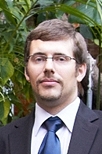
Dr. Robert Csetnek, University of Vienna and STAR-UBB Institute Advanced Fellowship: Approaching nonsmooth optimization problems by splitting methods: theory, algorithms and applications


 Undergraduate Programmes