Unveiling Hybrid Cyclomatic Complexity: A Comprehensive Analysis and Evaluation as an Integral Feature in Automatic Defect Prediction Models (2025)

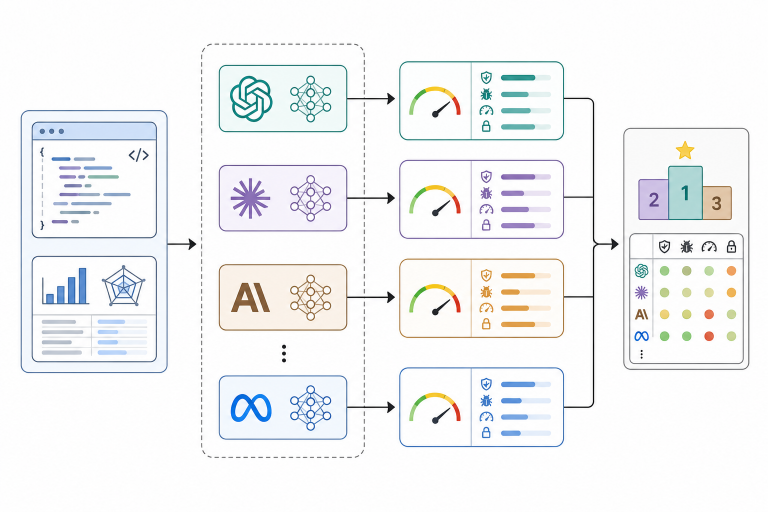
The complex software systems developed nowadays require assessing their quality and proneness to errors. Reducing code complexity is a never-ending problem, especially in today’s fast pace of software systems development. Therefore, the industry needs to find a method to determine the qualities of a software system, the degree of difficulty in developing new functionalities,…

TF1-EN-3M: Three Million Synthetic Moral Fables for Training Small, Open Language Models (2025)

Moral stories are a time-tested vehicle for transmitting values, yet modern NLP lacks a large, structured corpus that couples coherent narratives with explicit ethical lessons. We close this gap with TF1-EN-3M, the first open dataset of three million English-language fables generated exclusively by instruction-tuned models no larger than 8B parameters. Each story follows a…

Small Open Models Achieve Near Parity with Large Models in Low Resource Literary Translation at a Fraction of the Cost (2025)

Literary translation has recently gained attention as a distinct and complex task in machine translation research. However, the translation by small open models remains an open problem. We contribute to this ongoing research by introducing TINYFABULIST TRANSLATION FRAMEWORK (TF2), a unified framework for dataset creation, fine tuning, and evaluation in English-Romanian literary translations, centred…

Textural analysis and artificial intelligence as decision support tools in the diagnosis of multiple sclerosis – a systematic review (2025)

Introduction Magnetic resonance imaging (MRI) is conventionally used for the detection and diagnosis of multiple sclerosis (MS), often complemented by lumbar puncture—a highly invasive method—to validate the diagnosis. Additionally, MRI is periodically repeated to monitor disease progression and treatment efficacy. Recent research has focused on the application of artificial intelligence (AI) and radiomics in…

UOLO: A Multitask U-Net YOLO Hybrid Model for Railway Scene Understanding (2025)

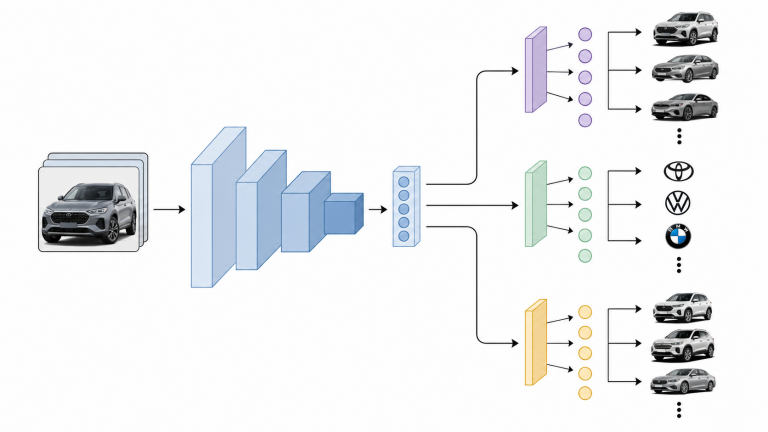
Extracting essential information including the topological structure of rail-tracks, the position of switches and their current state can increase safety by reducing human error, while also boosting the efficiency of rail transportation. Despite the impressive advancements in the field of autonomous driving, computer vision approaches in the rail domain are still a small niche.…

A Hybrid Granular Ball-Ant Colony Optimization for the Multi-Depot Half-Open Time-Dependent Electric Vehicle Routing Problem (2025)

Electric vehicles (EVs) are increasingly utilized in logistics and distribution to expedite achieving carbon peaking and neutrality goals, drawing considerable attention to the Electric Vehicle Routing Problem (EVRP). This study investigates the Multi-Depot Half-Open Time-Dependent Electric Vehicle Routing Problem (MDHOTDEVRP) and aims to improve coordination and distribution efficiency among logistics depots. This problem involves…

ContRail: Realistic Railway Image Synthesis using ControlNet (2025)

Deep learning became an ubiquitous paradigm due to its extraordinary effectiveness and applicability in numerous domains. However, the approach suffers from the high demand for data required to achieve the potential of this type of model. An ever-increasing subfield of Artificial Intelligence, Image Synthesis, aims to address this limitation through the design of intelligent…

Resolvi: A Reference Architecture for Extensible, Scalable and Interoperable Entity Resolution (2025)

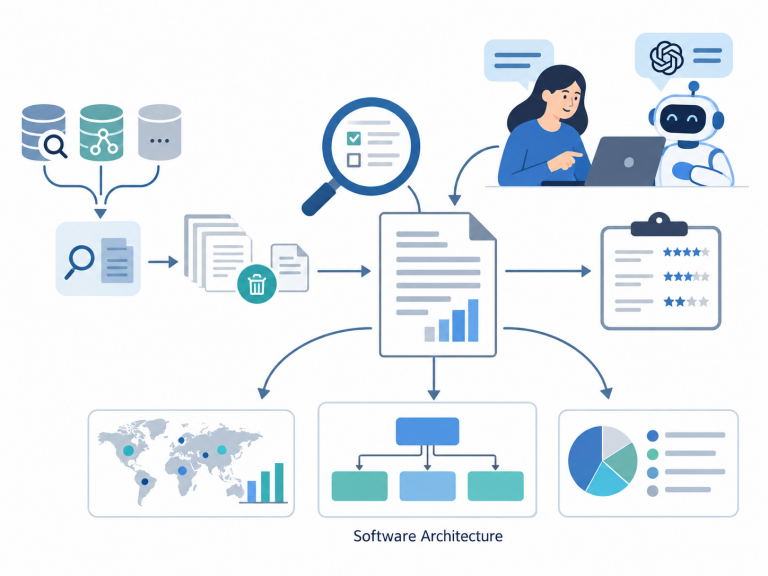
Context: Entity resolution (ER) plays a pivotal role in data management by determining whether multiple records correspond to the same real-world entity. Because of its critical importance across domains such as healthcare, finance, and machine learning and its long research history designing and implementing ER systems remains challenging in practice due to the wide…