
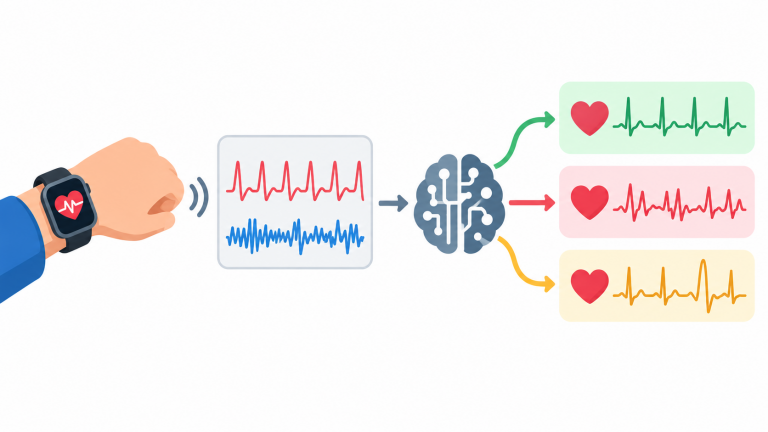
Development of an efficient deep learning model for arrhythmia detection from consumer smartwatches (2026)

Frontiers in Artificial Intelligence Authors Dan-Cristian George, Mihai-Alexandru Hulubeac, Ştefan-Lucian Grămadă, Z. Bálint, L. Dioşan Abstract Cardiac arrhythmias often progress without clear symptoms and may remain undetected until severe complications occur. Continuous monitoring through consumer smartwatches offers a scalable and non-invasive opportunity for real-time rhythm screening in free-living conditions. However, wrist-based photoplethysmography (PPG) signals…
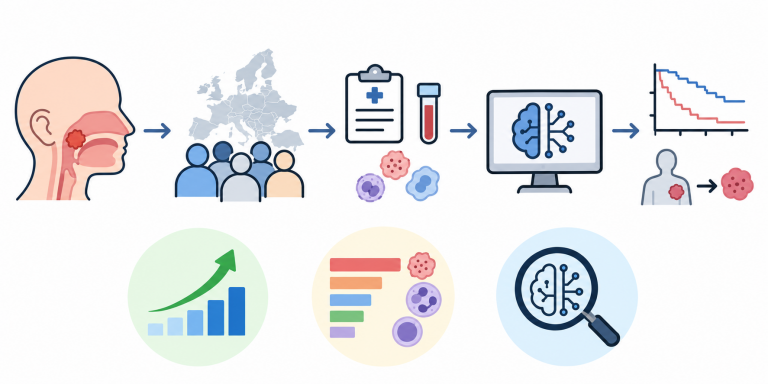
Machine learning prognostication in nasopharyngeal carcinoma: a european multicentre analysis of survival and risk of second malignancy (2026)

European Archives of Oto-Rhino-Laryngology Authors I. Pușcaș, Anda Gâta, P. Rizzo, M. Stellin, V. Rampinelli, D. Tomasini, C. Piazza, Daniele Borsetto, W. Ince, C. Chiesa-Estomba, Maria Landa-Garmendia, P. Surda, Eleanor J. Crossley, Matt Lechner, Teodora Maria Ursu, L. Cernau, Adél Bajcsi, Laura-Silvia Dioşan, C. Chira, Alexandra Roman, V. Gâta, Alexandru Irimie, Silviu Albu Abstract…

Assessment of cracks in beams using changes in the measured frequencies and Particle Swarm Optimization (2023)

This paper presents a method for detecting a crack in simply supported beams by identifying its location and severity (depth). The method is based on the measured natural frequencies for several bending vibration modes of an intact and cracked beam and the Particle Swarm Optimization (PSO). To explain the approach, we calculate the relative…