Skip to content
- 17 March 2026 – F-TRANSFER workshop
-
- 9:00-9:10 – Welcome Message and Opening Remarks
-
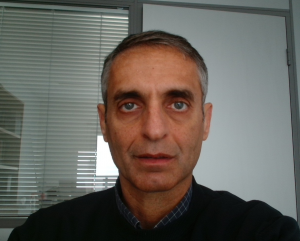
- 9:10-10:10 – Keynote: Prof. Andreas Lanitis
-
-
- Title: Emerging Technologies for Training and Education: Case Studies and Future Challenges
-
- Abstract: Emerging technologies such as extended reality (XR), computer vision, and artificial intelligence (AI) are transforming how people learn, practice skills, and receive feedback, enabling the adoption of contemporary approaches to training and education. This presentation outlines practical examples of personalized learning in immersive XR environments for experiential and simulation-based training, computer vision systems that support real-time performance analysis and assessment, and AI-driven educational applications. The case studies encompass both school-based education and professional training, illustrating how these technologies are reshaping educational and workplace environments by making training procedures and strategies more efficient, adaptive, engaging, and scalable. The talk concludes with a discussion of software engineering challenges related to the adoption of emerging technologies-based training and educational applications in real-world settings.
-
- Short BIO: Andreas Lanitis is a Professor, at the Department of Multimedia and Graphic Arts, Cyprus University of Technology, and a Research Group Leader at the CYENS Centre of Excellence (cyens.org.cy). He is the founder and leader of the Visual Media Technologies Co-Lab that operates both at the Cyprus University of Technology and the CYENS Centre of Excellence. Andreas Lanitis received a B.Eng in Electronic Engineering (1991) and a Ph.D in Image Processing and Computer Vision (1995), both from the University of Manchester, UK. His research interests include Machine Vision, Biometrics, Machine Learning, Artificial Intelligence, and Virtual Reality Applications. He published more than 200 articles in Journals, Books and Conferences/Workshops and participated in more than 30 research programs funded by National and European research agencies. According to the Stanford Elsevier List, he is included in the 2% of the most influential researchers in the field of Artificial Intelligence & Image Processing.
-
- 10:10-10:30 – Q& A + Discussions
- 10:30 – 11:00 Morning coffee break
-
-
- Title: Experience Report on Teaching Battery Testing through Process Simulation
-
-
- Authors: Eliza Maria Olariu and Horia Hedesiu
-
-
- Title: Facilitating Continuous Professional Development: A Machine Learning Approach to Personalized Learning Paths
-
-
- Authors: Cristian Valea and Ovidiu Aritoni
-
-
- Title: Teaching Automated Web Regression Testing through Character-Driven Storytelling
- Authors: Bogdan Iudean and Ioan Daniel Pop
-
-
- Title: Enhancing Software Engineering Education Through Explainable Automatic EBC Labelling
-
-
- Authors: Dzikri Rahadian Fudholi and Andrea Capiluppi
-
-
- Title: AI-Assisted Diagnosis of Students’ Misconceptions on Memory Allocation and Dynamic Data Structures in C++
-
-
- Authors: Ioan Daniel Pop and
- 12:30 – 14:00 Lunch break
Scroll to top